
Planning a themed party sounds fun in theory, but in real life it often turns into a mess of tabs, carts, unfinished DIY ideas, and decor that looked better in your head than it does on the table. A Star Wars party can be especially tricky because it is easy to go too big too fast. The theme is visually rich, the references are endless, and once you start collecting ideas, everything begins to feel like it belongs. That is exactly how a manageable plan turns into an overcomplicated project.
The good news is that a Star Wars party does not need a giant budget, a garage full of props, or three late nights of crafting to feel fun and memorable. In most cases, the strongest themed parties work because they have a clear point of view. They pick a small number of recognizable details, repeat them consistently, and let the mood do the rest. If your invitations, food table, a few labels, and one focal decoration all tell the same story, guests will feel the theme immediately.
That is why the smartest way to plan a Star Wars party is not to ask, “How much stuff can I add?” but rather, “Which small details will carry the theme best?” Once you answer that, the whole event becomes easier to organize.
Start with one visual direction
One of the fastest ways to make a themed party feel chaotic is to mix every possible reference into the same room. Star Wars is a huge universe, and that is part of the problem. If you pull in cute droids, dark Sith tones, neon space graphics, desert planets, and every character color palette at once, nothing feels intentional anymore.
Instead, choose one visual direction before you buy or print anything. It can be broad, but it should still have a lane. For example, you might go with a clean galaxy look built around black, navy, silver, and white. Or you could lean into a warmer movie-night setup with dark tableware, glowing lights, and a few dramatic signs. A kid-focused party may work better with bold, playful colors and recognizable character silhouettes rather than trying to recreate a cinematic scene.
When the visual lane is clear, every later choice gets easier. Plates, cups, favor bags, signs, and table details no longer need to be impressive on their own. They just need to fit the same mood. This saves money and cuts decision fatigue, which is half the battle when you are planning a party around family life, work, and normal household chaos.
Use invitations and printables as low-effort theme carriers
People often think “themed party” means giant decor moments, but in practice the strongest theme carriers are usually the small printed elements. Invitations set expectations before anyone even arrives. Food labels make a snack table feel playful. A simple welcome sign gives the whole room a point of entry. Cup markers, mini tent cards, and activity sheets do more for cohesion than an extra pile of random decorations.
That is why printables are one of the most useful shortcuts for busy hosts. You do not have to hand-make every decorative piece or spend days assembling a themed setup from scratch. If you want ready-to-use inspiration for invitations, signs, and other easy party details, browsing a collection of Star Wars party printables can save a surprising amount of planning time. The point is not to overload the room with paper. It is to use a few strategically chosen printed touches so the theme feels deliberate without becoming a craft marathon.
This approach is especially helpful when you are trying to keep the setup realistic. Printed details are lightweight, flexible, and easy to adapt. They work for birthdays, family movie nights, and mixed-age gatherings because they create recognition without taking over the entire space.
Keep the decor simple and intentional
Once the invitation and paper details are doing part of the thematic work, the rest of the decor can stay surprisingly restrained. You do not need to transform the room into a film set. In fact, trying to do that often makes the result look more cluttered than immersive.
A better plan is to focus on three visual zones:
- the entry or welcome area
- the food and drinks table
- one photo-friendly or gift-table focal point
That is enough to make the event feel complete.
For the entry area, even a small sign, a balloon cluster, or a short themed phrase can do the job. For the food table, use a table covering that matches your chosen color palette and add a few labels or upright signs. If you want a photo-friendly corner, it can be as simple as a banner, a backdrop cloth, or one clean decorative arrangement rather than a wall full of mismatched props.
The big lesson here is restraint. Guests notice when a setup feels polished. They do not sit there counting how many themed objects you bought. In fact, too many visual elements can make a party feel harder to enjoy, especially when food, gifts, or games compete for the same space.
Make the food table do double duty
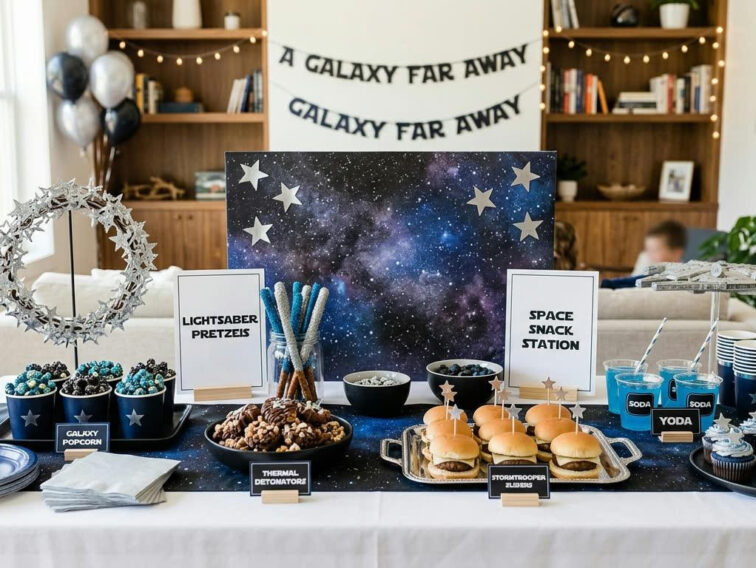
If you are hosting at home, the food table is usually one of the best places to express the theme without creating more work than necessary. People naturally gather there, look at it, and interact with it. So instead of pouring all your energy into wall decor, let the snack area do double duty as both a practical station and a visual centerpiece.
This does not mean every snack needs a clever pun or a custom recipe. In fact, it is often better to use familiar foods and make them feel themed through naming and presentation. Popcorn, cookies, fruit skewers, pretzels, cupcakes, and simple drinks are easy to serve and easy for guests to recognize. Then you can add a few labels or display cards to turn the table into something memorable.
This is also the easiest way to keep the event low-stress. You do not need a fully custom menu. You need a table that feels organized, readable, and fun. One showpiece item plus several easy crowd-pleasers will carry the experience much better than six complicated recipes made while you are already tired.
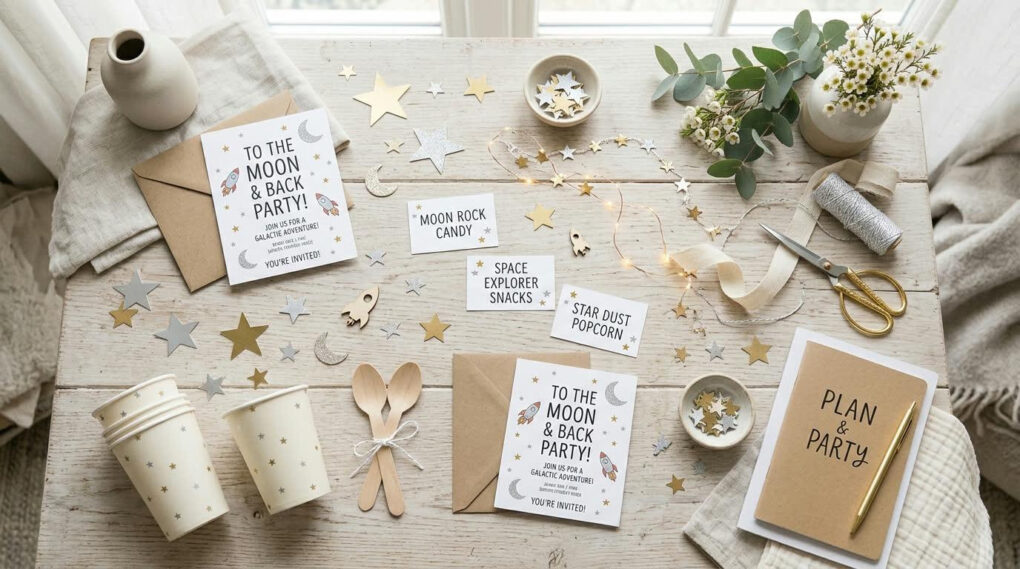
Low-stress themed party planning flat lay
Decide early what can be prepared in advance
A lot of party stress comes from doing too much on the actual day. That is why one of the most useful planning moves is to divide everything into three categories:
- prepare now
- prepare the day before
- do at the last minute
Invitations, labels, signs, favor tags, and activity sheets belong in the first category. Those can be handled early and taken off your mental load. Tableware, room layout, and non-perishable decor decisions usually belong in the second. Final food assembly, candles, ice, and a few fresh items can stay in the last-minute group.
This sounds obvious, but hosts often mix these categories together and end up treating everything as urgent. The result is a day-of scramble where the smallest tasks start to feel huge. A simple preparation timeline helps prevent that. It also makes it easier to ask for help because people can take on clear tasks instead of vaguely “helping with the party.”
Don’t overbuy just because the theme is fun
Star Wars is one of those themes that can easily convince you to keep adding things. More cups, more toppers, more favors, more decals, more tiny themed extras. But the reality is that the most useful purchases are the ones guests actually interact with.
If something will be seen once and then disappear into the visual background, it may not deserve your money. Invitations, food table elements, signs, and a couple of strong focal details are usually enough. Everything else should earn its place by solving a practical problem or adding a clear visual benefit.
This is especially true for family parties where cleanup matters just as much as setup. A manageable party is often more enjoyable than an ambitious one that leaves you exhausted before guests even arrive.
Build around the feeling, not the checklist
What people tend to remember from a themed party is not whether every corner had matching decor. They remember that the space felt welcoming, the food table was fun, the details made sense, and the host did not seem totally fried. That matters more than chasing perfection.
A good Star Wars party works because it gives guests a shared mood: excitement, familiarity, a little playfulness, and enough thoughtful detail to make the event feel special. If you focus on a clear visual direction, a few useful printables, a simple snack plan, and realistic prep timing, you can create exactly that without overcomplicating the whole thing.
In the end, the goal is not to prove how much effort you can survive. It is to make the party feel cohesive, easy to enjoy, and memorable for the right reasons.